
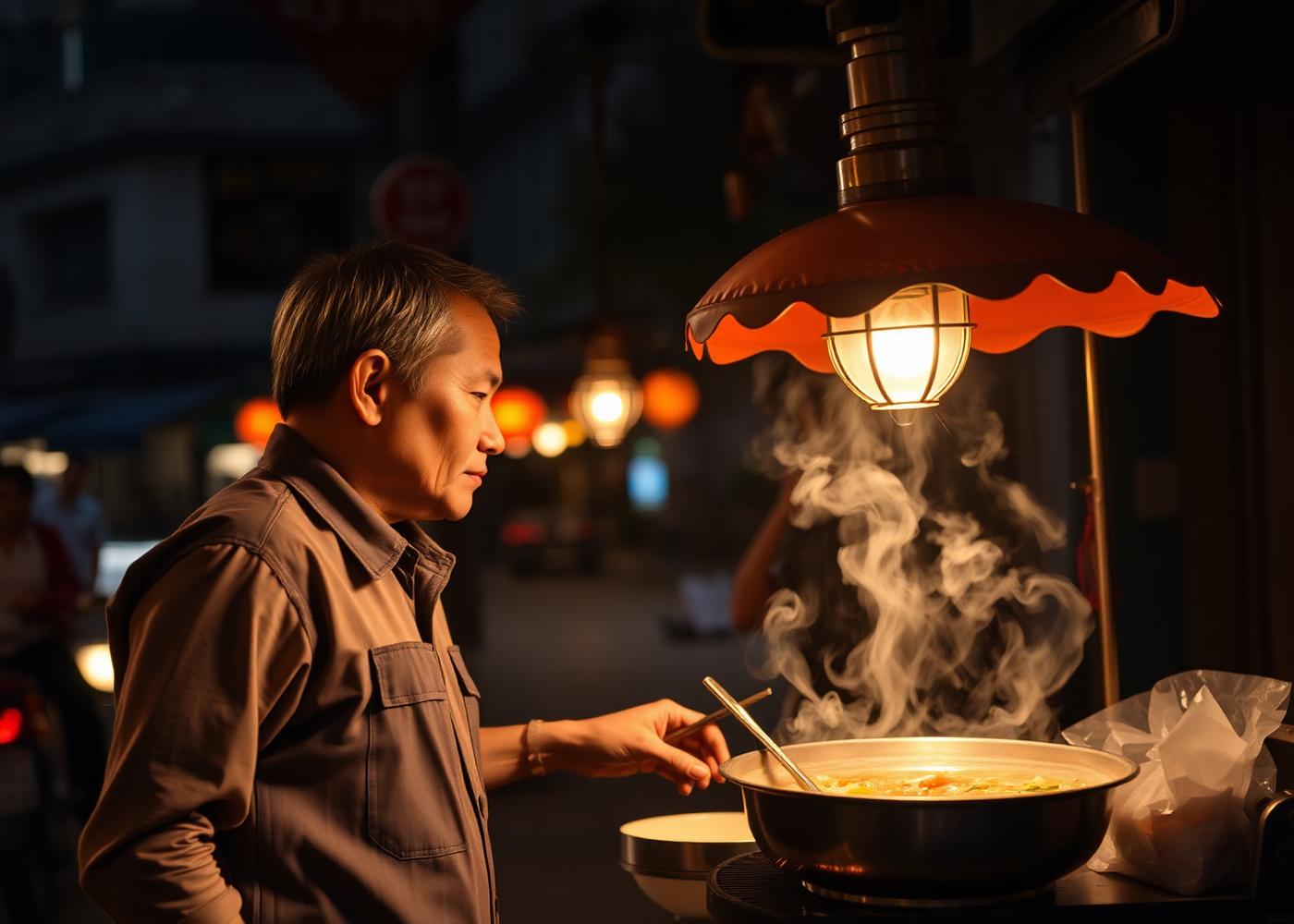
At six in the morning in Hanoi, before the traffic has fully woken, the pho vendors in the Old Quarter are already at work. Bones have been simmering since two the previous afternoon. Rice noodles are being blanched. Herbs are being trimmed. And a small line is forming at a doorway on Ly Quoc Su street that has no sign, no menu, and no reason to exist except that it has been serving pho bo from the same stove since 1979.
This is the city that Anthony Bourdain understood better than any outsider before or since. Hanoi is not a city with good food; Hanoi is a city where food is the primary reason for architecture, urban planning, and social life. You do not eat in Hanoi. You navigate it by eating.
Pho bo: the correct order
Pho is Hanoi's morning meal. By noon most of the good stalls have run out or closed. If you want to understand the dish, eat it before ten.
Pho Gia Truyen at 49 Bat Dan is the specialist's answer. The queue starts at 6:30 AM, and yes, it moves. You order at the counter — usually just chin (well-done brisket), nam (flank), or tai (rare beef sliced into the hot broth at the table). Pay first, receive a bowl at a shared plastic table, and eat quickly because someone is waiting for your seat.
The broth is the entire dish. It should be almost clear, faintly sweet from the roasted onion and star anise, and hot enough to cook the raw beef in about twenty seconds. Do not add sriracha. Do not add hoisin. In Hanoi, a proper pho is finished only with a squeeze of lime, a few slivers of chilli, and possibly a splash of vinegar-preserved garlic. Anything more is Saigon-style, and Hanoi people will politely say so.
Bun cha: the midday obsession
Bun cha is Hanoi's midday meal, and it is the one that outsiders fall hardest for. Fatty pork patties grilled over charcoal until the edges char, served in a bowl of warm, sweet-sour fish sauce with sliced green papaya and carrot, alongside a plate of vermicelli noodles and a hedge of fresh herbs — mint, perilla, cilantro, Vietnamese basil.
Bun Cha Huong Lien at 24 Le Van Huu is famous because Obama and Bourdain ate there in 2016; skip it. The queue is now permanent and the food has slipped. The specialist's choice is Bun Cha Dac Kim at 1 Hang Manh, which has been grilling since 1966 and remains the honest article. Order the combo with a nem cua be — a crab spring roll — on the side.
The way to eat bun cha is not the way it arrives. Take a small handful of noodles from the vermicelli plate, dunk them into the fish sauce bowl, add a piece of pork, add herbs to taste, and eat. Repeat. Do not try to pour the sauce over the noodles; that is a beginner's move that a Hanoi grandmother will notice.
Banh mi, egg coffee, and the afternoon
Between lunch and dinner is when Hanoi's cafe culture takes over. This is a French colonial inheritance transformed into something wholly Vietnamese. The banh mi — a stubby baguette with a light, crackly crust and a soft interior — is filled with pate, cold cuts, pickled daikon and carrot, cucumber, cilantro, and chilli. It is the perfect afternoon snack. Banh Mi 25 on Hang Ca is the current specialist's pick, though the queue is now international.
Egg coffee — ca phe trung — sounds wrong on paper. Egg yolks whipped with condensed milk into a pale, sweet mousse, floated on top of strong black Vietnamese coffee. In practice it tastes like a warm, boozy tiramisu, and the Hanoi cafe that invented it in 1946, Cafe Giang on Nguyen Huu Huan, still serves it exactly the same way. Order it hot in winter, cold in summer, and drink it slowly while the ceiling fan wobbles overhead.
The night stalls
After nine, when the day has cooled and the Old Quarter's pedestrian streets fill up, the night food comes out. This is when the specialist's map really matters, because the good stalls are unmarked and easy to miss.
Cha ca — grilled turmeric-marinated catfish served over vermicelli with dill and peanuts — is the signature dish of Cha Ca La Vong on Cha Ca street. It is a single-dish restaurant that has been serving nothing but this one preparation since 1871.
Bun rieu — a tomato and freshwater crab noodle soup — is the late-night comfort. Bun Rieu Huyen Thu, a small stall at 40 Hang Bac that only operates from 7 PM to midnight, is where taxi drivers go before their shift ends.
And finally, xoi xeo — sticky rice with mung bean, fried shallots, and a whisper of chicken fat — is the 11 PM snack. The elderly woman with the wicker basket at the corner of Nguyen Huu Huan and Hang Muoi has been selling it from the same corner for over thirty years. She closes when the rice runs out, usually before midnight.
The rules
Sit on the plastic stool the vendor points to. Do not photograph the food before you eat it — take one quick photo after your first bite if you must. Cash only, small notes. Tipping is not expected but rounding up is polite. Do not order water; order tra da, the free jasmine iced tea that arrives automatically. And if a stall has no queue at peak time, there is a reason — walk on.
Frequently asked
Is Hanoi street food safe for foreign stomachs?
Overwhelmingly yes, if you follow the rules: eat at busy stalls with high turnover, drink bottled or boiled water, and avoid raw seafood salads from stalls without refrigeration. First-time visitors rarely have issues.
How much should I budget per day for food?
A serious street-food day — six or seven small meals across the city — costs roughly $15 to $25 USD per person. Even the most famous stalls charge under $4 per bowl.
Do I need a food guide?
For your first two days, yes — a specialist guide gets you past the tourist stalls and into the real ones, and translates the ordering. After that, you can navigate the Old Quarter alone with confidence.