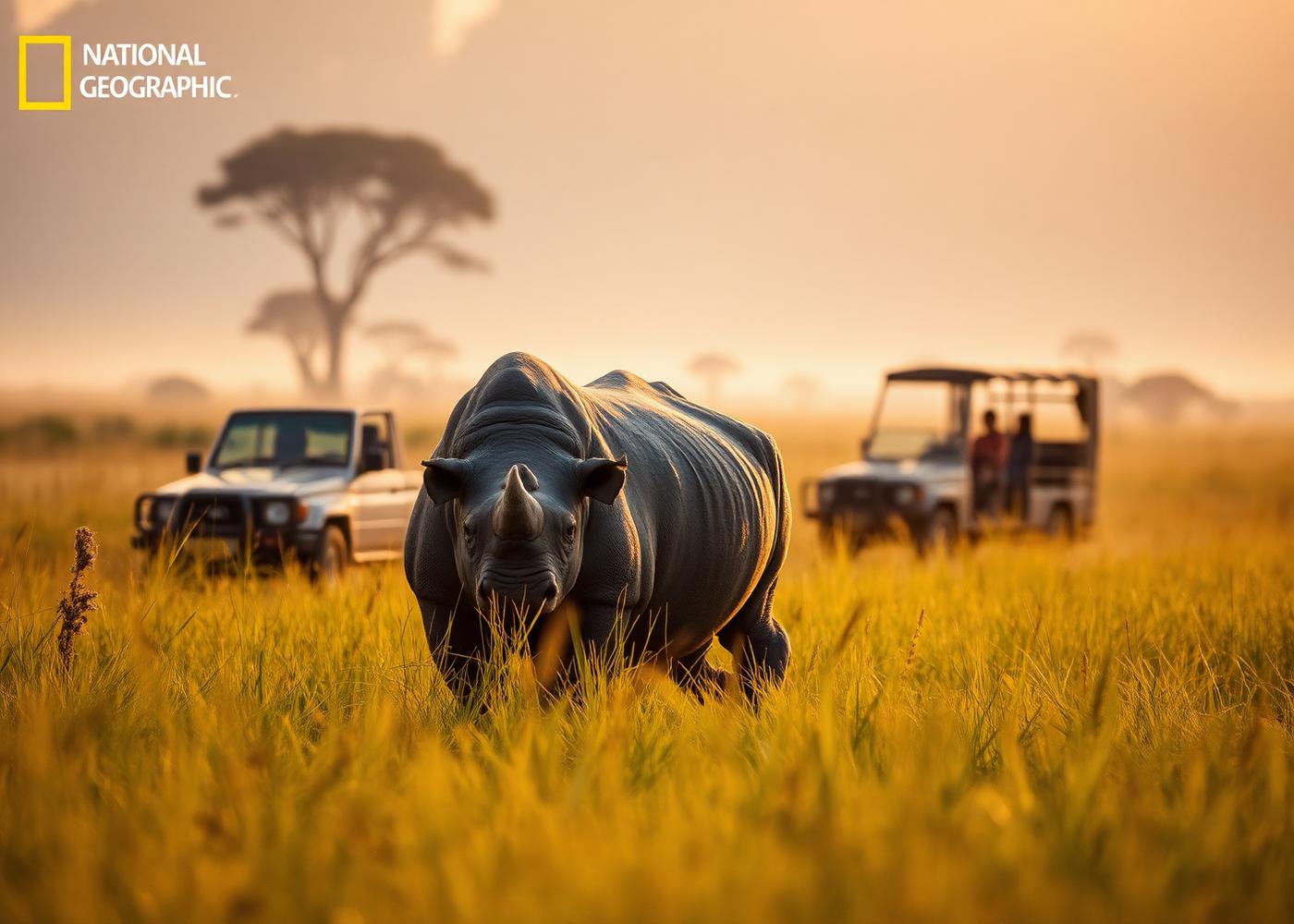
It is still dark when the jeep pulls out of the Kohora range gate at 5:15 AM, and the mist over the elephant grass is thick enough to feel on your face. Twenty minutes in, the driver kills the engine on a rise overlooking a shallow beel — one of the seasonal wetlands that make Kaziranga what it is — and points into the grey.
A shape resolves. Then another. Three greater one-horned rhinoceroses, standing in ankle-deep water, exhaling clouds of breath into the cold air. Behind them, a hog deer picks its way through the reeds. Above, a fish eagle turns a slow circle. And this is not even a good sighting by Kaziranga standards — this is a typical fifteen minutes.
The park, and its improbable success
Kaziranga was gazetted as a reserved forest in 1908 to protect the last surviving population of Rhinoceros unicornis, then estimated at fewer than a dozen animals across the entire Brahmaputra valley. Today the park is home to roughly 2,600 rhinos — around 66% of the world population. It is one of the great conservation success stories of the 20th century, and it happened without a global spotlight.
The park stretches for 430 square kilometres along the south bank of the Brahmaputra, a mosaic of tall elephant grass, semi-evergreen forest, and seasonal wetlands. This is not a park where you drive for hours between sightings. The density of large mammals here is one of the highest in Asia — Bengal tigers, Asian elephants, wild water buffalo, swamp deer, and, in the winter months, over 200 bird species.
When to go
Kaziranga is open from November 1 to April 30. The rest of the year, monsoon floodwaters from the Brahmaputra submerge much of the park.
November to February is the peak season and the coolest window — mornings around 8 to 12 degrees Celsius, afternoons around 22 to 26. The grass is still tall in early November, which can hide animals, but by December it has been grazed down and visibility opens up dramatically.
March and April are hotter (daytime highs of 32 to 36) but produce the best sightings of the year because animals concentrate around the shrinking water sources. This is also when tiger sightings peak, though a tiger in Kaziranga is never a guarantee — the grass is generous cover and even veteran guides consider a clear tiger sighting a stroke of luck.
The four ranges
Kaziranga is divided into four safari zones. Booking across two or three of them across a stay is the specialist's approach.
Kohora (Central Range) is the classic first-morning safari — the most reliable for rhino sightings, well-maintained tracks, and closest to most lodges. Do not underestimate it just because it is the popular option.
Bagori (Western Range) is where the wild water buffalo herds and the largest concentration of rhinos in the western half of the park live. The landscape is more open here.
Agaratoli (Eastern Range) is the birder's zone — wetlands, oxbow lakes, and the best chance of the Bengal florican, a critically endangered ground bird. It is also less trafficked, which means fewer jeeps between you and the wildlife.
Burapahar is the newest range, opened for tourism relatively recently, and the most forested. It is the best chance for the elusive hoolock gibbon and, occasionally, a leopard.
Jeep or elephant?
Kaziranga is one of the few Indian parks that still runs elephant-back safaris, at dawn only, in the Kohora and Bagori ranges. There is a debate to have here about the welfare of park elephants and the ethics of the practice. Our view: the working elephants in Kaziranga are treated meaningfully better than in most tourist settings, and elephant-back safaris allow you into the tall grass in a way no jeep can. But it is a decision to make consciously, and skipping it in favour of an extra jeep drive is a perfectly good choice.
For the rest of your safaris, use open jeeps. Two safaris a day — one dawn, one late afternoon — for three full days is the sweet spot. Any less and you will feel rushed; any more and even the rhinos start to look ordinary.
Where to stay
Kaziranga has three tiers of accommodation. IORA is the most polished — a proper resort with a pool, a good restaurant, and knowledgeable naturalists on staff. Diphlu River Lodge is the character option, a small cluster of cottages on the Diphlu river with a genuinely conservation-minded owner. Wild Grass Lodge, older and simpler, is where serious naturalists have stayed since the 1990s and remains excellent value.
All three lodges will arrange your jeep and safari bookings, park entry permits, and a knowledgeable naturalist to accompany you. Do not try to book the safaris yourself — the permit system requires local intervention.
Beyond the park
Kaziranga deserves a proper trip, not just a stopover. Combine three nights at the park with two nights on a Brahmaputra river cruise — the Charaidew II runs from Guwahati to Neamati Ghat and stops at Majuli, the world's largest river island. Or add two nights in the tea gardens around Jorhat, an hour's drive from the park.
Frequently asked
How many days do I need in Kaziranga?
A minimum of three nights, which gives you five or six safari slots across different zones. Two nights is really only enough for two safaris and feels rushed.
What are my chances of seeing a rhino?
Extremely high — most guests see 15 to 30 rhinos across their stay. Kaziranga has the highest density of one-horned rhinos in the world.
Is Kaziranga good for children?
Yes, from about age seven or eight. Early wake-ups and long jeep rides are demanding for younger children, but the reliable large-mammal sightings make it much more rewarding than most parks.