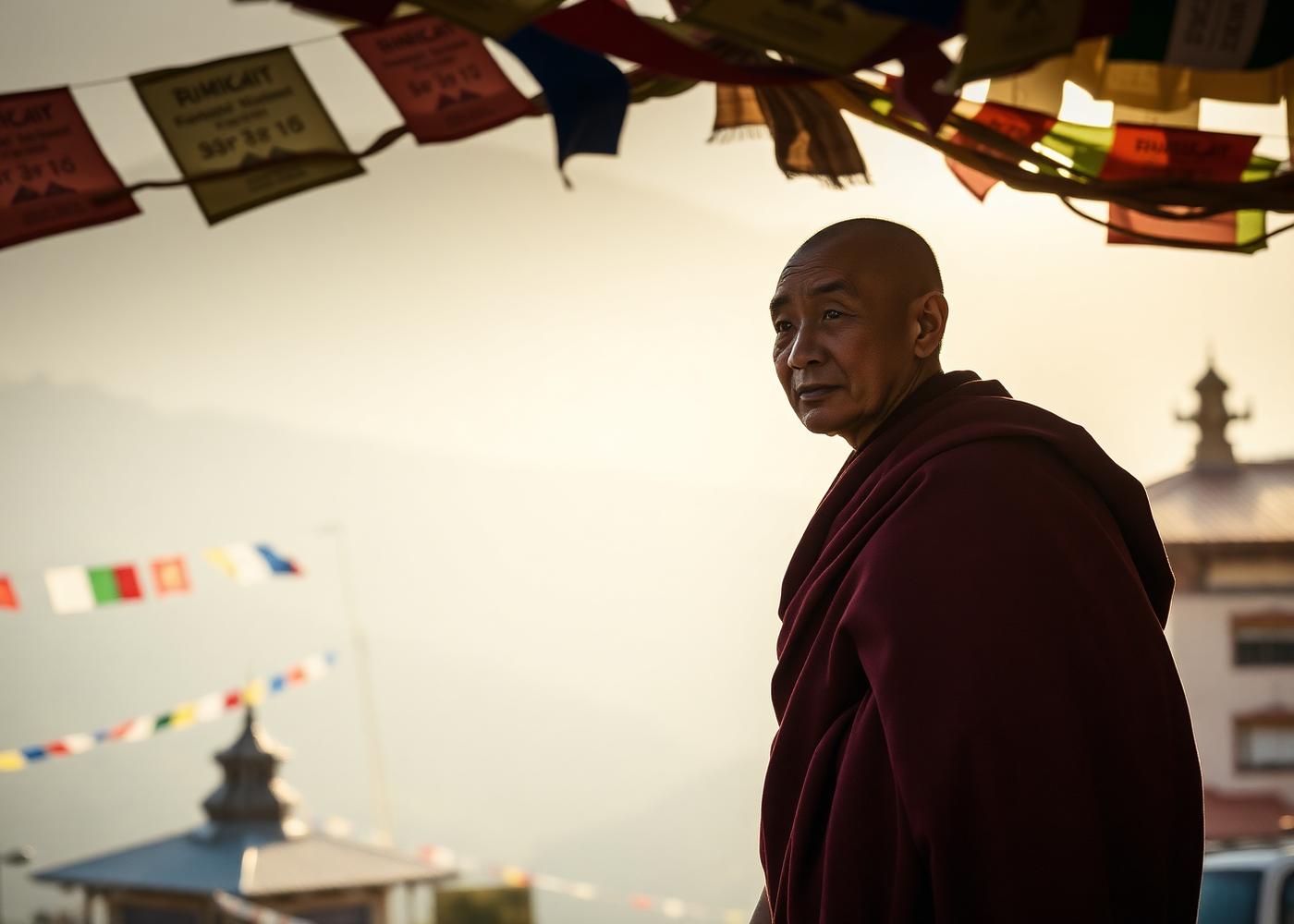
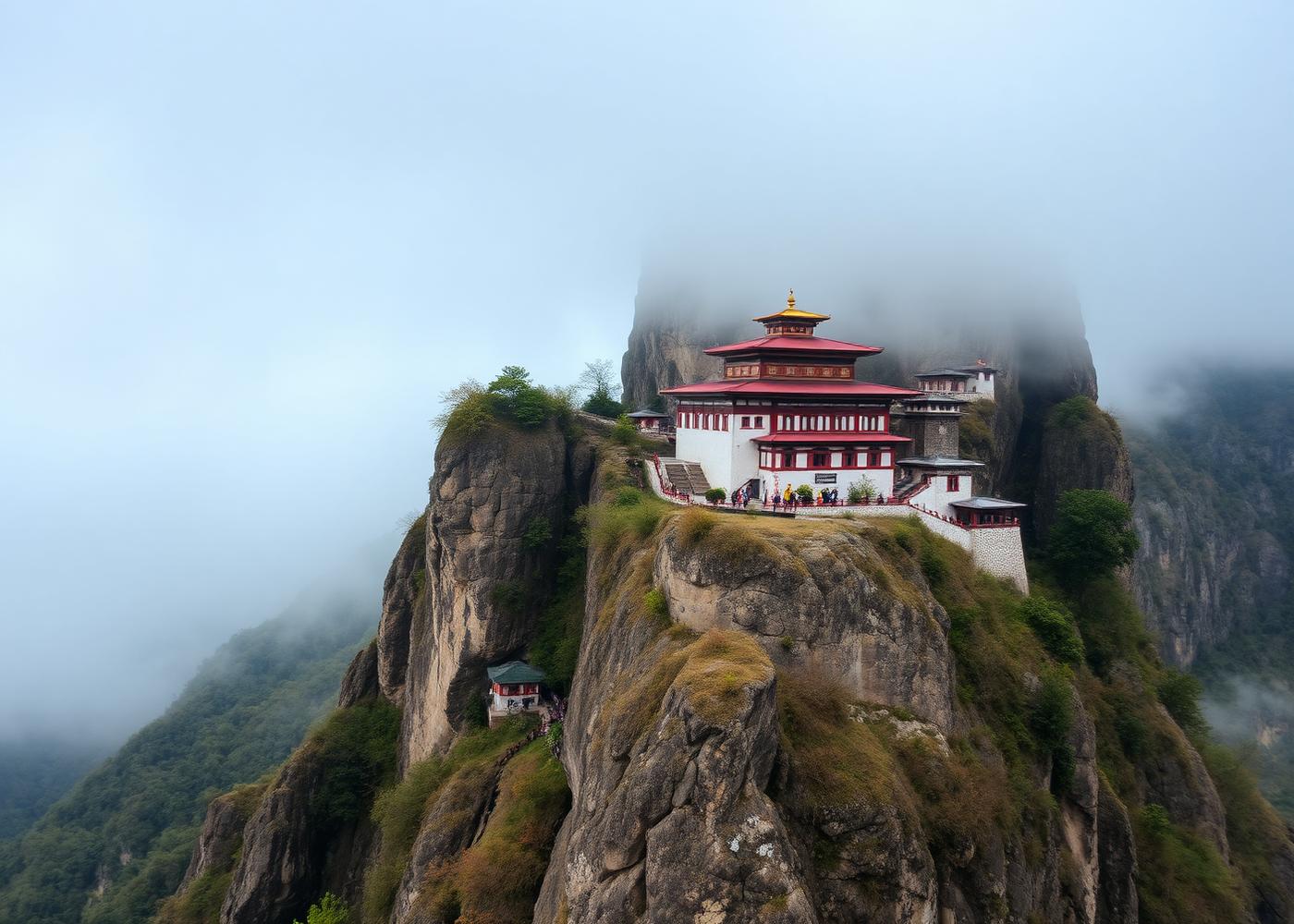
The trailhead for Paro Taktsang begins at 2,600 metres above sea level, in a parking lot ringed by fluttering prayer flags and a small huddle of ponies waiting for guests who want to ride the first half of the climb. From here, the monastery is a white speck clinging to a cliff face 900 metres above you, and you cannot quite believe you are going to walk to it.
You will. Everyone does. Grandmothers do it. Children do it. Two of the guides I have worked with have done it more than four hundred times each, and both still stop at the cafeteria on the way up to catch their breath.
Why it matters
Paro Taktsang — the Tiger's Nest — is the most sacred site in Bhutan. In the eighth century, Guru Rinpoche, the Indian tantric master who brought Buddhism to Bhutan, is said to have flown here on the back of a tigress and meditated in a cliffside cave for three years, three months, three weeks, and three days. The monastery built around the cave in 1692 has burned twice, most recently in 1998, and been faithfully rebuilt each time.
For a Bhutanese Buddhist, visiting Taktsang once in a lifetime is a spiritual imperative. For a visitor, it is the closest you will come to understanding why the country's constitution measures Gross National Happiness alongside GDP.
The climb, honestly
The trail is roughly 4 kilometres one way, with an elevation gain of about 700 metres. Most guests take two and a half to three hours to reach the monastery, an hour at the top, and two hours to descend. Plan the entire day for it.
The first half, to the cafeteria at the midpoint, is a steady climb through pine forest on a wide dirt track. Ponies are available for this section only. From the cafeteria, the trail narrows and becomes stone steps — down into a gorge with a waterfall, then up a final steep flight to the monastery gate.
The altitude is the real challenge, not the distance. Paro town sits at 2,200 metres and the monastery at 3,120. If you have not spent at least a night acclimatising in Paro or Thimphu before the hike, you will feel it. Drink water constantly, walk at your own pace, and do not skip breakfast.
Inside the monastery
Cameras, phones, and bags are checked in at the entrance — no exceptions, including for foreign dignitaries. This is the right policy, and after the initial disappointment you will realise that not photographing the interior forces you to actually see it.
There are eight small temples inside the complex, connected by narrow staircases carved into the rock. The most sacred is the cave where Guru Rinpoche meditated, a small dark chamber with an altar and a single butter lamp burning perpetually. Guests are allowed inside only briefly, and only in silence.
Give the monastery at least 45 minutes of proper attention. Sit in one of the outer courtyards. Watch the monks change the offering water in the seven silver bowls on the altar. Feel your pulse slow down. This is what you climbed for.
When to hike
March to May and September to November are the two best windows. Skies are clear, temperatures at Paro altitude are 8 to 20 degrees Celsius, and rhododendrons bloom in April and May. October is the peak month — post-monsoon clarity, festivals across the country, and the most reliable mountain views.
December to February is cold but manageable. The monastery is often at its most atmospheric with a light dusting of snow, and there are almost no crowds. June to August is the monsoon and the least ideal time — trail conditions become slick and the view from the cliff is often lost in cloud.
The wider Bhutan trip
A Bhutan trip that hikes Taktsang and leaves is a trip that misses Bhutan. The country's minimum sustainable daily fee — currently $100 to $200 USD per person per day depending on season — is designed to filter out volume tourism, and it works. A week to ten days is the right length.
The classic Bhutan itinerary starts in Paro, moves to Thimphu (the capital, and the only capital in the world with no traffic lights), continues to Punakha with its extraordinary dzong at the confluence of two rivers, and returns to Paro for the Taktsang climb on one of the last days. Add the Bumthang valley and central Bhutan if you have more than ten days — this is where the country becomes something wholly other, unhurried and folkloric in a way even Paro has slowly forgotten.
The philosophical bit
Bhutan will not change your life in the way an Instagram caption suggests. What it does, more subtly, is slow you down. There are no billboards. There is almost no plastic. The traffic policeman in Thimphu still directs cars by hand from a small wooden pavilion in the middle of the roundabout, because the town tried a traffic light once, in 1997, and everyone hated it. The country runs on a version of time that is closer to the pace of walking. Taktsang is the physical enactment of that lesson.
Frequently asked
How fit do I need to be to hike Taktsang?
If you can walk for four hours on hilly terrain with breaks, you can do this hike. Age is less relevant than altitude tolerance and knee condition.
How much does a Bhutan trip cost?
Beyond flights, budget roughly $250 to $500 USD per person per day for a well-designed 8-day trip. This covers the government fee, all accommodation, meals, transport, guide, and permits.
Can I visit Bhutan independently?
Every foreign visitor must travel with a licensed tour operator. Indian passport holders have simpler rules but a good specialist still makes the trip significantly better.