It is quarter past five on a Tuesday in mid-March, and the mist over Makaibari has not yet decided whether to lift. The pluckers — mostly women, in coats over cotton saris — are already fanned out across the slope, their fingers moving with the small, precise motion that only comes from decades of the same movement. A basket fills two leaves and a bud at a time.
This is the First Flush. For roughly three weeks each spring, the tea gardens of Darjeeling produce what many consider the most delicate black tea on earth. If you time a visit right, you will taste a cup that costs a small fortune in Berlin or Tokyo — poured, at the estate, from a battered aluminium kettle.
What actually is a First Flush?
A tea plant does not produce leaves evenly through the year. In the Darjeeling hills, the winter dormancy from late November through February concentrates aromatic compounds in the plant's tissue. When the first warm days of March coax new growth, that concentrated character comes out in the young leaves — a pale, greenish liquor with a distinct floral, almost muscatel edge.
The window is short. The plucking begins in the first week of March in the lower gardens and finishes by the second week of April in the highest estates. After that, the plant's growth accelerates and the leaves lose that concentrated delicacy. What follows is the Second Flush in May and June — richer, darker, more famous internationally — but the First Flush is the connoisseur's obsession.
The estates worth visiting
There are 87 registered tea estates in the Darjeeling district. You cannot visit them all, and honestly, you should not try. A well-designed First Flush trip focuses on three to four gardens across different altitudes, because altitude changes everything about the cup.
Makaibari, at about 1,500 metres, is the world's oldest tea factory still in operation and one of the earliest to go fully organic and biodynamic. It is also the easiest to visit — the estate runs guided walks, homestays with pluckers' families, and cupping sessions in a small tasting room above the factory floor.
Glenburn, higher up towards the Rungeet river, is the polished option. Its estate bungalow is one of the most beautiful heritage stays in India, and the tea tour is built for guests who want the story told well over four days rather than a two-hour drop-in.
Castleton and Margaret's Hope, both in the Kurseong sub-division, produce First Flushes that regularly break auction records. Access requires a specialist's introduction, which is where a local operator becomes essential.
How to taste, at the estate
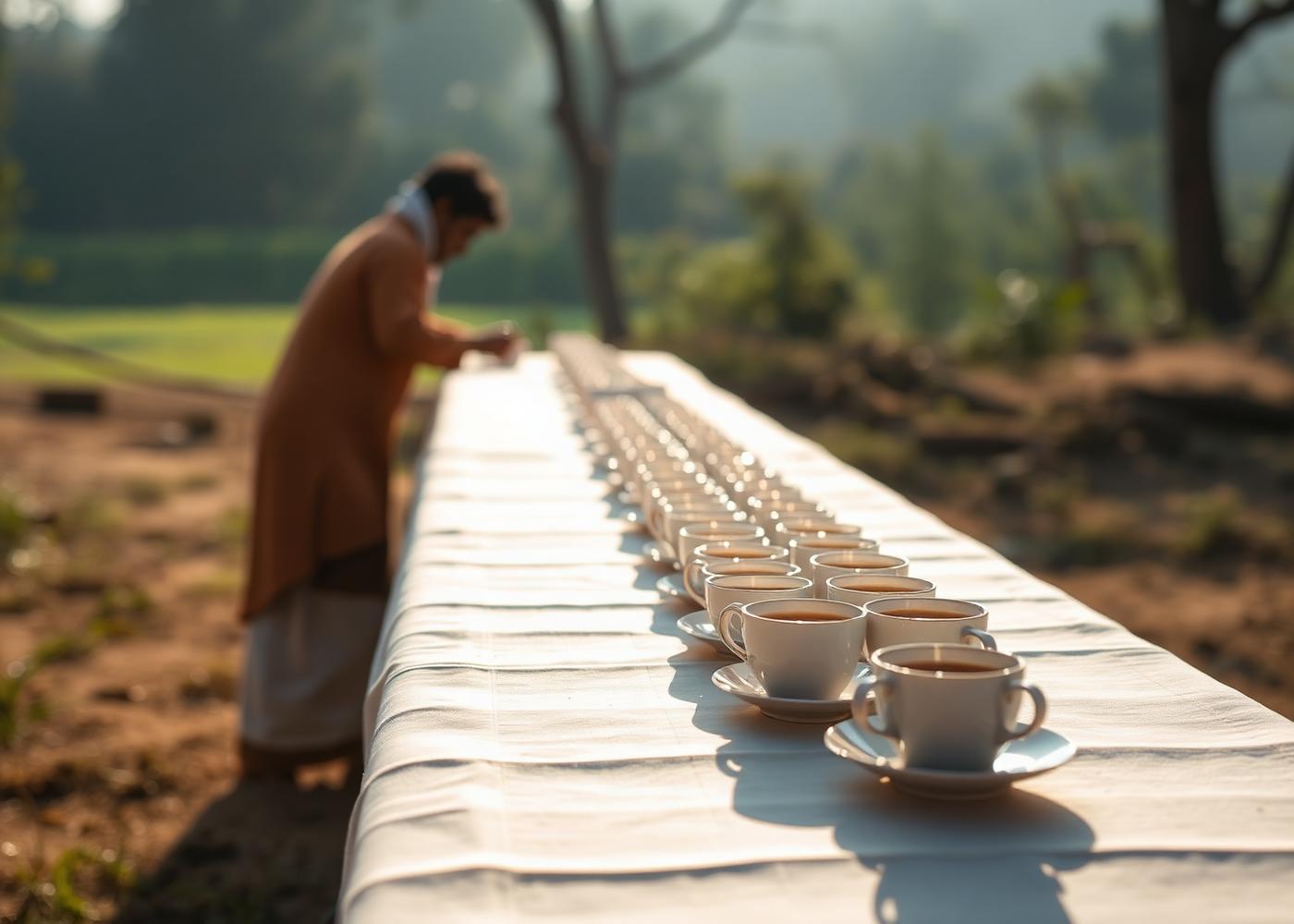
Tasting First Flush is not the ceremonial affair of a Japanese tea room. It is closer to a wine cupping. Small white porcelain cups are lined up, each holding a fixed weight of leaf — usually 2.8 grams. Boiling water goes in, the timer runs for five minutes, and the tasters (mostly the estate manager and a couple of buyers) slurp aggressively to aerate the tea across the palate.
You are looking for three things. First, the liquor colour — a bright, coppery green is the ideal. Second, the aroma from the wet leaves — muscatel, jasmine, a faint hint of green apple. Third, the finish — a First Flush should leave your mouth feeling clean and slightly cool, never heavy.
If a tea tastes flat, dusty, or too grassy, it was probably plucked too early, before the plant had built up its aromatic reserves. If it tastes stewed, the brewing was too long. Do not be shy about saying so; estate managers respect a guest who takes the tasting seriously.
When to plan the trip
The First Flush window is narrow: broadly March 5 to April 12. Within that, the best cupping experience is usually in the third or fourth week of March, when enough gardens have started production for you to compare across estates but the season has not yet run out of steam.
Book your stay by early January at the latest. The heritage bungalows — Glenburn, Sinclairs Retreat, the Elgin — sell out for the First Flush season nearly a year in advance. If you are travelling with an operator, they will hold rooms for you before this rush begins.
Weather in March is generally clear in the mornings, with a chance of light afternoon showers as the season progresses. Days are 15 to 22 degrees Celsius; nights drop to 8 to 12. Pack layers, waterproof shoes for the garden walks, and a small notebook — you will taste more teas than you can remember.
A note on responsible visits
Darjeeling's tea industry supports roughly 55,000 workers across the district, and the economics of the industry are fragile. A responsible tea trip pays fair estate visit fees, buys tea directly from the garden rather than through Kolkata middlemen, and — if you stay in a homestay — tips the family that hosts you generously. A First Flush trip designed by a specialist ensures your money reaches the pluckers' cooperatives directly, not just the auction houses in Kolkata.
Frequently asked
How long should a First Flush trip be?
Five to seven nights is ideal — enough to visit three estates at different altitudes, do at least two proper cuppings, and still have a day to spend in Darjeeling town itself.
Can I buy tea directly from the estate?
Yes, and it is often the best value. Most estates run a small retail counter and can pack vacuum-sealed tins for you to carry home.
Do I need a tea background to enjoy this trip?
Not at all. A good specialist guide will teach you the tasting protocol on your first morning, and by day three you will be picking out muscatel notes on your own.